Understanding Why Backlinks Can Make or Break Your SEO
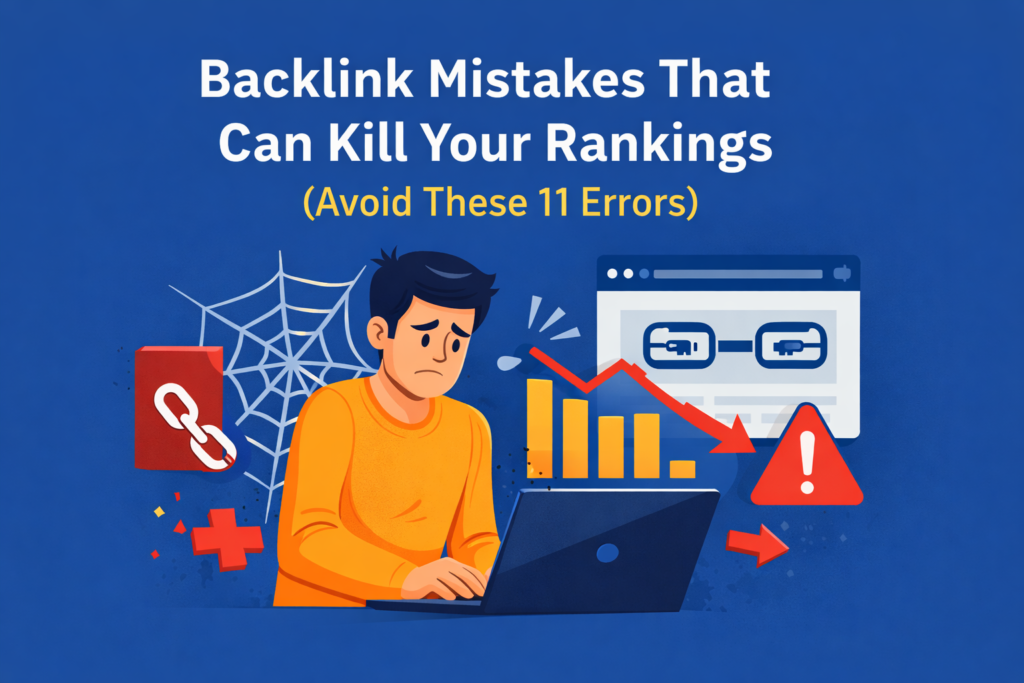
Backlinks are still one of the strongest ranking signals in SEO—but only when done correctly. Many bloggers assume that more backlinks automatically mean better rankings. In reality, the wrong backlinks can destroy months (or years) of hard work.
Google’s algorithms in 2025–2026 are smarter than ever. They don’t just count links; they evaluate link quality, intent, relevance, and patterns. This means a single bad strategy can lead to ranking drops, deindexing, or even manual penalties.
This guide covers the most dangerous backlink mistakes that can kill your rankings, why they happen, and how to avoid them.
To build a safer and more effective link-building strategy, it’s important to fully understand how backlinks work and how they impact long-term SEO performance.
Buying Low-Quality Backlinks: A Common SEO Mistake
This is the #1 backlink mistake that still hurts websites today.
Buying backlinks from:
- Fiverr gigs
- “1,000 backlinks for $10” services
- Private blog networks (PBNs)
- Spammy directories
…may give a short-term boost, but it almost always ends in a penalty.
Why This Is Dangerous
Google can easily detect:
- Paid link footprints
- Repeated linking patterns
- Low-authority domains linking unnaturally
Once detected, your site may lose rankings overnight.
Better approach:
Earn backlinks naturally through content, outreach, and value-driven resources.
Google Search Central – Link Spam & Unnatural Links
https://developers.google.com/search/docs/advanced/guidelines/link-spam
Over-Optimised Anchor Text: A Backlink Mistake That Hurts Rankings
Anchor text manipulation is one of the fastest ways to trigger Google’s spam filters.
Common Mistakes
Using the exact same keyword-rich anchor text repeatedly, such as:
- “best SEO tools”
- “Buy backlinks online”
- “cheap web hosting”
Why This Hurts Rankings
Natural backlinks use a mix of:
- Branded anchors
- URL anchors
- Generic anchors (click here, learn more)
Over-optimisation signals manipulation, not trust.
Fix:
Use a natural anchor text ratio and let most links be branded or contextual.
Irrelevant Backlinks and How They Kill Rankings
Relevance matters more than ever.
A backlink from a related niche is far more valuable than dozens from unrelated sites.
Example of a Bad Practice
- SEO blog getting links from gambling or adult sites
- Tech blog receiving backlinks from random coupon directories
Google evaluates topical relevance between:
- The linking page
- The linked page
- The overall domain
Rule:
If the linking site doesn’t make sense to your audience, it won’t help your rankings.
Toxic Backlinks: One of the Biggest SEO Mistakes
Many site owners never check their backlink profile—and that’s a huge mistake.
Toxic Links Include:
- Spammy foreign domains
- Auto-generated blog comments
- Hacked websites
- Malware-infected pages
Even if you didn’t build them, Google still associates them with your site.
Solution:
Regularly audit backlinks and disavow harmful ones when necessary.
Unnatural Link Velocity: A Backlink Mistake to Avoid
A sudden spike in backlinks looks suspicious.
Example
A new blog getting:
- 500 backlinks in one week
- All from low-quality sources
- With similar anchor text
This pattern screams manipulation.
Google expects natural growth, especially for new sites.
Best practice:
Build backlinks slowly and consistently.
Internal Linking Mistakes That Weaken SEO Rankings
Backlinks cannot save weak content.
Even high-quality backlinks won’t help if:
- Content doesn’t satisfy search intent
- Information is thin or outdated
- User experience is poor
In 2026, content quality + backlinks together drive rankings—not links alone.
Linking From Penalised or Deindexed Sites
A backlink from a penalised site can pass negative signals.
Many bloggers don’t check:
- Whether a site is indexed
- Its traffic history
- Past penalties
Always verify before accepting or placing links.
Participating in Link Exchanges Excessively
“Link to me, and I’ll link to you” sounds harmless—but overdoing it is risky.
Google allows some natural reciprocal links, but large-scale exchanges are a red flag.
Risky Patterns
- Excessive cross-linking
- Footer link swaps
- Private link groups
Keep link exchanges minimal and natural.
Using Automated Backlink Tools
Automation tools that blast links across:
- Forums
- Blog comments
- Profiles
…are outdated and dangerous.
Google’s spam detection systems identify these patterns easily.
Manual, quality-first link building always wins.
Ignoring Internal Linking While Chasing Backlinks
Many bloggers obsess over backlinks, forgetting the importance of internal links.
Internal linking:
- Passes authority
- Improves crawlability
- Supports ranking pages
A strong internal structure can amplify the power of existing backlinks.
Not Updating Old Backlinks
Old backlinks pointing to:
- Broken pages
- Redirect chains
- Deleted URLs
…lose value over time.
Regularly update:
- Redirects
- Link destinations
- Outdated resources
This keeps your backlink profile healthy.
FAQs: Backlink Mistakes That Can Kill Your Rankings
Do backlinks still matter in 2026?
Yes, but quality, relevance, and intent matter more than quantity.
Can bad backlinks hurt even if I didn’t build them?
Yes. Ignoring toxic backlinks can still impact rankings.
Is disavowing backlinks always necessary?
Only when links are clearly spammy and harmful.
Are nofollow backlinks useless?
No. They still help with trust, branding, and traffic.
How many backlinks do I need to rank?
There’s no fixed number—content quality and competition matter more.
What’s safer: guest posts or link insertions?
Guest posts on relevant, real sites are generally safer.
Conclusion
Backlinks are powerful—but only when built correctly. The backlink mistakes that can kill your rankings often come from shortcuts, automation, and lack of strategy. In 2026, Google rewards trust, relevance, and authenticity, not manipulation.
Focus on:
- Earning links naturally
- Publishing valuable content
- Monitoring your backlink profile
Avoid these mistakes, and your rankings will be far safer and more sustainable.
To build a safer and more effective link-building strategy, it’s important to fully understand how backlinks work and how they impact long-term SEO performance.